close
Choose Your Site
Global
Social Media
Views: 0 Author: Site Editor Publish Time: 2026-06-03 Origin: Site
Riding safely demands rapid communication of your intentions to other drivers. Sadly, factory halogen bulbs often look dated and underperform. They leave riders vulnerable in heavy traffic. Upgrading your lighting bridges the functional gap between old filament technology and modern safety demands. Today, sourcing a reliable motorcycle LED turn signal is a critical safety decision. You must balance strict visibility requirements, custom aesthetic goals, and complex electrical compatibility.
Expect this evaluation process to go deeper than surface-level looks. Finding the right upgrade requires moving past clever aesthetic marketing claims. You need to assess true lumen output, rugged build quality, and practical installation realities. We will guide you through understanding electrical loads, decoding product specifications, and choosing configurations tailored to your specific motorcycle. By the end of this guide, you will know exactly how to evaluate and install aftermarket lighting securely.
Dynamic amber and dual-color LED configurations improve rider visibility while enabling streamlined, custom aesthetics.
Evaluating a motorcycle LED turn signal requires strict attention to IP ratings, DOT/ECE compliance, and verifiable brightness metrics.
Upgrading to LED alters the electrical load; mitigating hyper-flash requires specific hardware interventions (load resistors or LED flasher relays).
"Universal fit" claims often require custom wiring adapters or mounting plates depending on the specific motorcycle make and model.
Halogen bulbs rely on heating a filament to produce light. This process creates a noticeable delay. When you engage a traditional blinker, it ramps up to full brightness slowly. In contrast, modern diodes ignite instantly. Upgrading to a high-quality motorcycle indicator bulb eliminates this delay entirely. This instantaneous illumination provides trailing drivers crucial extra fractions of a second to react. At highway speeds, saving milliseconds of reaction time translates to several feet of vital stopping distance. Beyond safety, diodes produce a highly saturated, high-contrast light output. This sharp contrast pierces through daylight much better than the washed-out yellow glow of standard halogens.
Motorcycles operate on limited electrical budgets. Stators produce a finite amount of power to run the engine, charge the battery, and power accessories. Traditional incandescent bulbs draw substantial amperage. Solid-state technology changes this dynamic completely. A typical halogen unit might draw up to 21 watts per bulb. A comparable diode setup often draws less than 3 watts.
Reduced Battery Drain: Leaving your blinker on at a long stoplight will not drain your battery.
Accessory Headroom: Freeing up electrical capacity allows you to run heated grips or GPS systems safely.
Cooler Operation: Less power draw means less heat generation inside the lighting housing.
Motorcycles generate intense harmonic vibrations. High-revving engines and uneven road surfaces send constant shocks through the chassis. Filament bulbs are exceptionally fragile under these conditions. Sustained high-frequency resonance ultimately snaps the delicate tungsten wire inside a halogen glass envelope. Solid-state electronics inherently withstand this harsh environment. Diodes contain no moving parts and no fragile filaments. Manufacturers mount these tiny chips directly to circuit boards, effectively immunizing them against engine vibration and road impacts. This rugged design guarantees your lighting remains functional during long, punishing rides.
The standard single-color upgrade serves as the baseline for most riders. These units focus entirely on producing a high-intensity amber output for dedicated signaling functions. They typically utilize a cluster of powerful diodes housed behind a specially engineered reflector. Because they only perform one function, manufacturers can optimize the internal circuitry purely for maximum brightness. These single-color options provide reliable, straightforward visibility without complicating your bike's wiring harness.
Dual-color setups, commonly called switchbacks, offer excellent multi-functionality. These units contain two distinct sets of diodes on a single board. For front applications, they run a constant white light to improve forward visibility. When you activate the turn switch, the white circuit turns off, and the amber circuit flashes. For rear applications, they combine a constant red running light or brake light alongside the amber blinker. These modules dramatically increase your nighttime footprint. However, they do require additional wiring to connect the running light circuit properly.
Instead of flashing all diodes simultaneously, these units trigger individual chips in a rapid sequence. A dynamic amber signal creates a sweeping motion radiating outward from the center of the bike. Traffic safety studies indicate moving light patterns capture human peripheral vision much faster than static blinking lights. The progressive sweep instinctively directs the observer's eyes toward the direction you intend to turn. This technology significantly improves the reaction time of surrounding traffic while delivering a premium, modern aesthetic.
Many custom builders prefer an ultra-clean profile. Micro indicators utilize incredibly small housings meant to disappear into the bike's frame lines until activated. Developing these tiny units requires intense engineering tradeoffs. Shrinking the housing reduces the available surface area for heat dissipation. To compensate, manufacturers must use ultra-efficient premium chips and advanced aluminum heat sinks. When sourcing micro options, you must verify their lumen output rigorously. Cheaply made miniature lights often fail to meet minimum daytime visibility standards.
Evaluating brightness requires understanding the difference between raw and effective output. Raw lumens represent the theoretical maximum light the internal chips can produce under perfect laboratory conditions. Effective lumens measure the actual light projected outward through the lens and reflector assembly. High-quality manufacturers use specialized optics to focus the light precisely where traffic needs to see it. You should always look for effective lumen ratings or specific lux measurements at defined distances. Avoid unbranded products boasting absurdly high raw lumen numbers, as they often scatter light poorly.
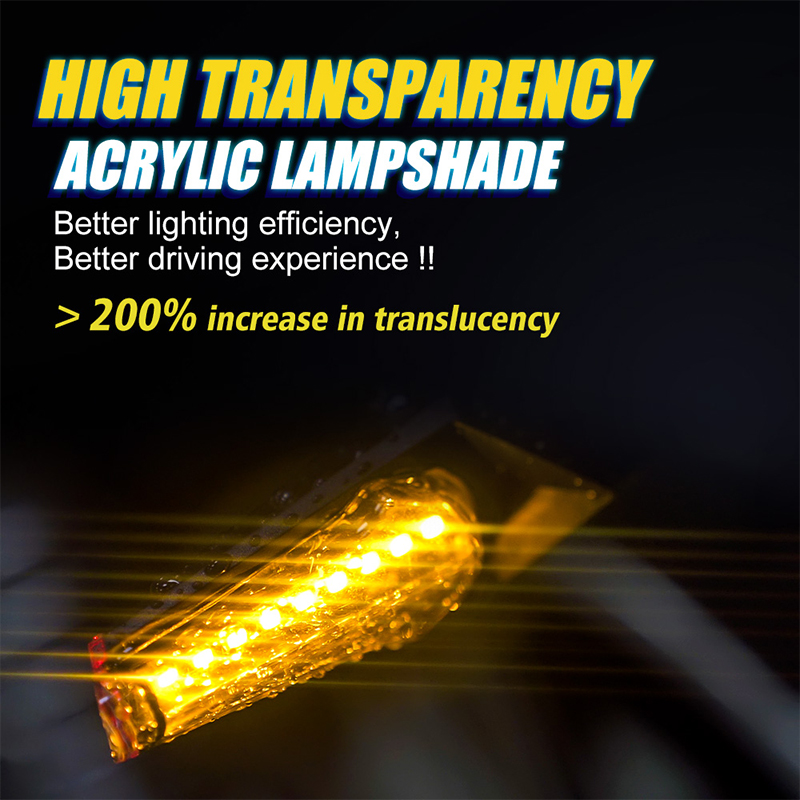
The lens dictates how light leaves the housing. Clear lenses offer maximum transmission but expose the internal circuitry visually. Amber lenses maintain a classic look and enhance color saturation. Smoke lenses are incredibly popular for stealthy aesthetics, but they introduce a severe visibility penalty. A heavily tinted smoke lens can block up to thirty percent of the total light output. If you choose a smoked setup, you must ensure the underlying chips are exceptionally powerful to compensate for this deliberate light restriction.
Powersports lighting lives entirely exposed to the elements. Rain, dust, mud, and high-pressure car washes constantly attack your electrical components. Industry standards use the Ingress Protection (IP) system to rate enclosures. For motorcycles, an IP67 rating serves as the absolute minimum acceptable standard. Anything rated lower risks premature failure from internal condensation or debris contamination.
IP Rating | Dust Protection Level | Water Protection Level | Powersports Suitability |
|---|---|---|---|
IP65 | Complete dust protection | Low-pressure water jets | Inadequate for exposed areas |
IP67 | Complete dust protection | Immersion up to 1 meter (30 mins) | Minimum standard for motorcycles |
IP68 | Complete dust protection | Continuous underwater immersion | Premium standard; excellent durability |
Street legality heavily dictates product selection. In the United States, lighting must meet Department of Transportation (DOT) FMVSS 108 standards. In Europe, the Economic Commission for Europe (ECE) dictates compliance. These markings ensure the light meets strict parameters regarding beam angle, intensity, and surface area. Many cheap aftermarket parts carry "off-road use only" disclaimers. Running non-compliant indicators can result in failed annual safety inspections. Furthermore, if you are involved in a collision, insurance adjusters might use illegal lighting modifications to assign liability against you.
Replacing stock parts introduces immediate electrical changes. Factory motorcycles utilize bi-metallic flasher relays. These traditional relays rely on the high electrical resistance of halogen bulbs to heat a small internal metal strip. As the strip heats up, it bends, breaks the circuit, cools down, and reconnects. This physical cycle dictates the blinking speed. Because a LED turn signal draws almost zero power, the relay never heats up properly. Consequently, the system blinks rapidly or locks up entirely. We call this widespread issue hyper-flash.
You have two primary methods to correct hyper-flash, and choosing the right one depends on your motorcycle's architecture.
Electronic Flasher Relays: This is the superior, cleaner solution. You simply unplug the factory bi-metallic relay and plug in an electronic relay. Electronic versions use internal timers rather than heat resistance to dictate the flash rate. They provide a simple plug-and-play fix for most standard bikes.
Load Resistors: Modern bikes using CAN bus modules rarely have standalone relays. The main computer controls the blink rate. For these bikes, you must splice load resistors parallel into the wiring. Resistors trick the computer by mimicking the heavy draw of a halogen bulb. Best Practice: Resistors get incredibly hot during operation. You must mount them directly to a metal frame component. Keeping them away from plastic fairings prevents accidental melting.
The powersports industry frequently advertises "universal 12V fit." This phrase misleads many buyers. While the basic electrical requirements match, physical fitment rarely does. Factory lighting stems fit into uniquely shaped cutouts on your fairings or fenders. Installing aftermarket stalks usually leaves ugly gaps. You will likely need model-specific mounting hole spacers to achieve a flush fit. Additionally, factory wiring harnesses use proprietary plastic clips. Unless you want to cut and solder your bike's main harness, you need custom wiring adapter pigtails to connect the new units seamlessly.
Before purchasing anything, clarify what you want to achieve. Are you prioritizing maximum nighttime visibility? If so, choose larger units featuring clear lenses and distinct reflectors. Do you want modern aesthetics to match a newer sportbike? A sweeping dynamic sequence will deliver that tech-forward look. Are you trying to clean up the tail section of a custom cafe racer? Ultra-compact micro LEDs will reduce your profile dramatically. Defining your goal prevents you from buying an incompatible style.
You must understand your specific machine before ordering hardware. Follow these steps to audit your setup:
Locate the Relay: Check your service manual to see if your bike uses a standalone flasher relay or a centralized CAN bus system.
Determine Pin Configuration: If you have a relay, check whether it uses a 2-pin, 3-pin, or custom multi-pin connector.
Inspect the Plugs: Look at the plastic connectors joining the factory stalks to the main harness. Note their shape so you can order matching adapter cables.
Measure Mounting Holes: Measure the diameter and shape of the mounting points on your fender or fairing to select correct spacer plates.
Quality electronics occasionally fail, especially in harsh powersports environments. Prioritize vendors offering straightforward, multi-year warranty terms. Aggressive discount pricing often indicates poor internal build quality and zero post-purchase support. Reputable manufacturers provide detailed wiring schematics, technical support phone lines, and precise fitment charts. Having access to good documentation saves countless hours during installation when you inevitably encounter a complex wiring scenario. Simply put, investing in a supported product guarantees peace of mind down the road.
Sourcing an effective lighting upgrade demands careful consideration. You must prioritize electrical compatibility, verifiable build quality, and regulatory compliance over purely visual appeal. Upgrading your systems will significantly improve your presence on the road, provided you execute the installation correctly. Remember to account for the electrical differences by securing the proper electronic relay or safely mounted load resistors.
We encourage you to audit your current factory setup today. Check your manual, inspect your wiring harness, and define your safety goals. Armed with this knowledge, you can confidently select a high-quality turn signal bulb or complete assembly. Choose a lighting configuration that complements your bike's aesthetic vision while uncompromisingly supporting your operational safety.
A: Not always. Replacing the factory flasher relay with an LED-compatible electronic relay is often a better solution. Electronic relays are cleaner and generate no heat. However, if your motorcycle relies on a complex CAN bus system to control lighting, you must use load resistors.
A: Legality depends entirely on DOT/ECE certification and specific local regulations regarding lens color. Generally, front running lights must be white or amber, and rear running lights must be red or amber. Always verify the manufacturer provides official compliance markings on the lens.
A: This is typically caused by insufficient voltage or an incompatible factory flasher relay. A traditional relay interrupts the power cycle too quickly, cutting power before the internal microchip can complete the sequential sweeping pattern. Installing a dedicated electronic relay solves this issue.
A: It generally means the electrical component runs on a standard 12V system. However, mounting threads, wire connectors, and stem lengths will almost certainly require adapters. You will usually need brand-specific wiring pigtails and mounting plates to fit the lights to your specific motorcycle.