

close
Choose Your Site
Global
Social Media
Views: 0 Author: Site Editor Publish Time: 2026-01-24 Origin: Site
Ever noticed a light scratch on your car after parking? It's frustrating, but many of these scratches can be fixed easily at home. In this article, we'll explore how to remove light scratches from your car effectively. You'll learn about simple DIY solutions, when to seek professional help, and how to prevent future damage.
Light scratches on a car’s paintwork are a common issue that many vehicle owners encounter. These scratches are usually superficial and can often be fixed without professional help. They typically affect the outermost layer of the car’s paint, which is the clear coat, and if treated promptly, they can be removed without causing further damage. Understanding what light scratches are and how to identify them can help you decide the best approach for removal.
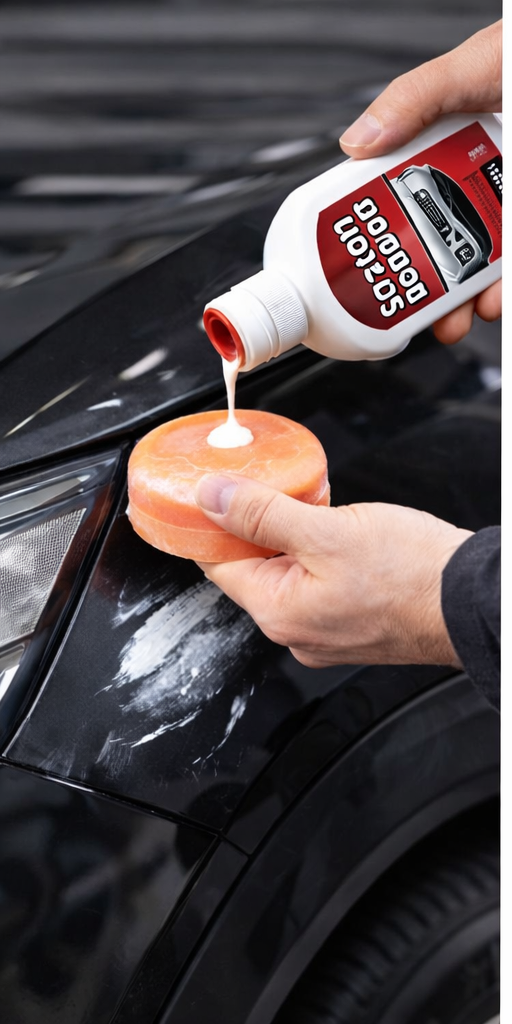
Light scratches are typically confined to the clear coat, which is the transparent layer of paint applied over the colored base coat of your car. These scratches are usually fine and barely noticeable but can still impact the car’s appearance. Clear coat scratches occur when external objects or abrasives lightly scuff the surface, leaving behind thin lines or marks. Unlike deeper scratches, light scratches don't reach the base paint layer and can often be repaired using basic DIY methods like polishing or applying a scratch remover.
The key difference between light scratches and deeper scratches lies in the depth of the damage. While light scratches only affect the clear coat, deeper scratches extend beyond this layer, penetrating the base coat or even the primer underneath. Deeper scratches are more noticeable and often feel rough to the touch. If your fingernail catches in the groove of the scratch, it's a sign that the scratch has gone beyond the clear coat, which requires more advanced repair techniques like touch-up paint or professional services. Therefore, it's important to assess the depth of the scratch to choose the appropriate removal method.
Assessing the severity of a scratch is crucial in determining the right approach to repair. Not all scratches require the same treatment, and understanding the extent of the damage will help you decide whether a simple DIY solution will work or if professional help is needed.
Car paint consists of multiple layers: the clear coat, base coat, primer, and the underlying metal. The clear coat is the thin, transparent layer that provides the glossy finish and protects the colored base coat underneath. The base coat is the colored paint, while the primer acts as a bonding agent between the base coat and the metal body of the car. When a scratch is only in the clear coat, it’s usually a minor surface scratch that can be easily fixed with polishing or a scratch remover. However, if the scratch goes deeper and reaches the base coat or primer, it may require more involved repair methods such as touch-up paint or professional services.
For light scratches confined to the clear coat, DIY solutions such as polishing, using scratch removers, or even toothpaste can often restore the car’s appearance. If your fingernail doesn’t catch in the scratch, it’s likely that the damage is surface-level and can be repaired at home. However, if the scratch feels deep or you can see the base coat or metal beneath the clear coat, professional repair may be necessary. Deeper scratches may require touch-up paint, clear coat application, or even sanding to restore the surface properly. Knowing when a scratch has gone beyond the clear coat will help you determine if a DIY fix will be sufficient or if a professional is needed to ensure a perfect repair.
Removing light scratches from your car can be an easy and cost-effective DIY task if the damage is limited to the clear coat. With the right techniques and products, you can restore your car’s appearance without the need for professional help.
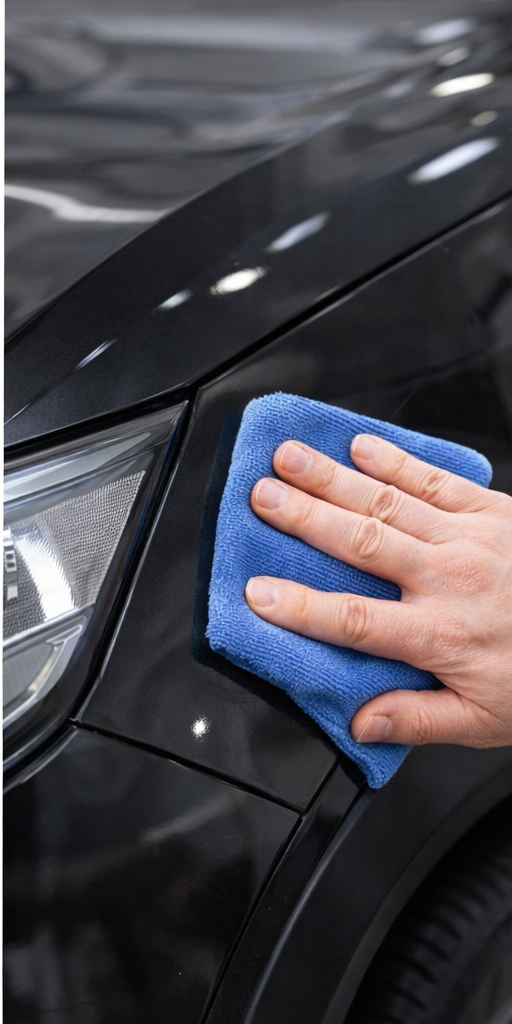
To remove light scratches using scratch removers or polishing compounds, start by cleaning the affected area thoroughly to avoid rubbing dirt into the paint. Apply a small amount of product onto a microfiber cloth or applicator pad. Using gentle, circular motions, rub the compound into the scratch for about 30 to 60 seconds. This helps to smooth the clear coat and remove surface imperfections. After buffing, wipe away any excess product with a clean, dry microfiber towel. Lastly, apply a layer of car wax to protect the repaired area and restore its shine. This method works well for shallow scratches that don’t penetrate the clear coat.
For very shallow scratches, toothpaste can serve as a mild abrasive to buff out the damage. Apply a small amount of whitening toothpaste to a damp microfiber cloth and rub it gently into the scratch in circular motions. After a few minutes, rinse and dry the area to check the results. If necessary, repeat the process until the scratch is less visible. WD-40 can also be used as a temporary solution to reduce the visibility of light scuff marks or paint transfer. Spray a small amount onto a clean cloth and rub it over the scratch, then wipe off any excess with a dry cloth. While these methods are useful for minor imperfections, they are not a permanent fix and may require reapplication.
Polishing compounds are another effective DIY option for light scratches. These products work by smoothing out the surface of the paint and filling in minor imperfections. To use a polishing compound, apply a small amount to a clean microfiber cloth or a polishing pad. Using a gentle, circular motion, buff the scratch and surrounding area for even coverage. Buffing tools can speed up the process and provide a more consistent finish, but it's important to use them carefully to avoid damaging the paint further. After polishing, always follow up with a coat of wax to protect the newly repaired area and maintain your car's shine.
While many light scratches can be easily fixed with DIY methods, there are situations where professional help is necessary. Knowing when to seek expert assistance can save time, money, and prevent further damage to your car's paint.
DIY methods are effective for light scratches that only affect the clear coat. However, if a scratch is deep enough to expose the base coat or primer, it may require professional attention. Signs that indicate a deeper scratch include when you can feel the scratch with your fingernail, or if the scratch extends beyond the clear coat, leaving the base paint visible. Additionally, if the scratch is large or covers a significant area, it may be difficult to achieve a seamless finish on your own. In these cases, a professional repair service is recommended to ensure proper surface preparation and color matching.
Professional scratch removal offers several advantages over DIY methods. Experts use specialized tools and techniques to restore the car’s paint to its original condition. One of the primary benefits is color matching, ensuring the repaired area blends perfectly with the surrounding paint. Professionals also provide rust prevention by properly sealing and protecting the repaired area, which is crucial if the scratch has exposed the metal. Moreover, their expertise allows them to fix deeper scratches more effectively, restoring the paint's smoothness and gloss. While the cost of professional repairs varies depending on the severity of the damage, it typically ranges from $100 to $300 for light scratches. However, this investment is worthwhile for a flawless, long-lasting finish.
Example Table for "DIY vs. Professional Repairs":
Feature | DIY Repair | Professional Repair |
Scratch Depth | Shallow, clear coat only | Deep, base coat or primer exposed |
Time Required | Quick, 30 minutes to an hour | Several hours, including curing |
Tools Needed | Scratch remover, microfiber cloth | Special equipment, color matching tools |
Cost | Low ($5–$50) | High ($100–$300) |
Results | Temporary, less seamless | Permanent, flawless finish |
Preventing scratches from occurring in the first place is key to keeping your car looking its best. While it’s impossible to completely avoid all scratches, taking a few simple precautions can significantly reduce the risk of damage to your car’s paint.
Careful parking is one of the simplest ways to avoid scratches. Always try to park in areas with plenty of space, away from other vehicles or objects that could cause accidental dings. Additionally, be mindful when opening doors, especially in tight spaces where the door could hit another car or object. Proper washing techniques also play a crucial role in preserving your car's paint. Use a soft microfiber mitt or sponge to gently wash the surface, avoiding any abrasive materials that could cause scratches. Lastly, consider using protective gear such as car covers or door edge guards to shield vulnerable areas of the car from scratches caused by environmental factors or other vehicles.
Waxing your car regularly not only enhances its appearance but also provides a protective layer that helps to shield the paint from minor scratches and environmental contaminants. Paint sealants, which offer longer-lasting protection than traditional wax, bond with the paint to create a durable barrier against dirt and debris. Another highly effective option is installing paint protection film (PPF). This clear, thin film acts as a shield, protecting the car’s paint from scratches, stone chips, and other potential damage. PPF is particularly beneficial for high-risk areas like the front bumper and side mirrors. Combining these protective measures will help ensure that your car’s paint remains in top condition for longer.
Example Table for "Types of Protective Coatings":
Coating Type | Protection Level | Duration of Protection | Application Ease | Cost Range |
Car Wax | Moderate | 1–3 months | Easy, requires reapplication | $10–$30 |
Paint Sealant | High | 6 months–1 year | Moderate, needs preparation | $20–$50 |
Paint Protection Film (PPF) | Very High | 5+ years | Professional installation required | $400–$1,500 |
Removing light scratches can be easily done with DIY methods like using scratch removers or polishing compounds. Regular maintenance and waxing help protect your car from future damage. Taking care of minor repairs early preserves your car's value. While you focus on maintaining the exterior, ensure your car’s visibility and safety with high-quality car lighting solutions from Tinye Technology CO., LTD. Their advanced automotive lighting products enhance your vehicle’s performance and appearance, complementing your paint care efforts.
A: A light scratch typically refers to superficial damage that only affects the clear coat, without reaching the base coat or primer. It is often repairable using polishing compounds and scratch removers.
A: DIY methods are effective when scratches are confined to the clear coat. For fleet vehicles with light scratches, using compounds can be a cost-effective, temporary solution to maintain appearance without professional intervention.
A: Removing light scratches can be done affordably with DIY solutions, reducing the need for costly professional repairs. However, for larger fleets, maintaining clear coat integrity through regular touch-ups can lower long-term maintenance costs.
A: While light scratches do not directly impact vehicle performance, regular maintenance such as waxing and polishing can protect against further paint damage, improving the vehicle’s longevity and resale value.
A: Light scratches, if left unaddressed, can lead to more serious paint degradation or rusting. Timely removal and protection help extend the vehicle's lifecycle and reduce repair costs in the long term.


